
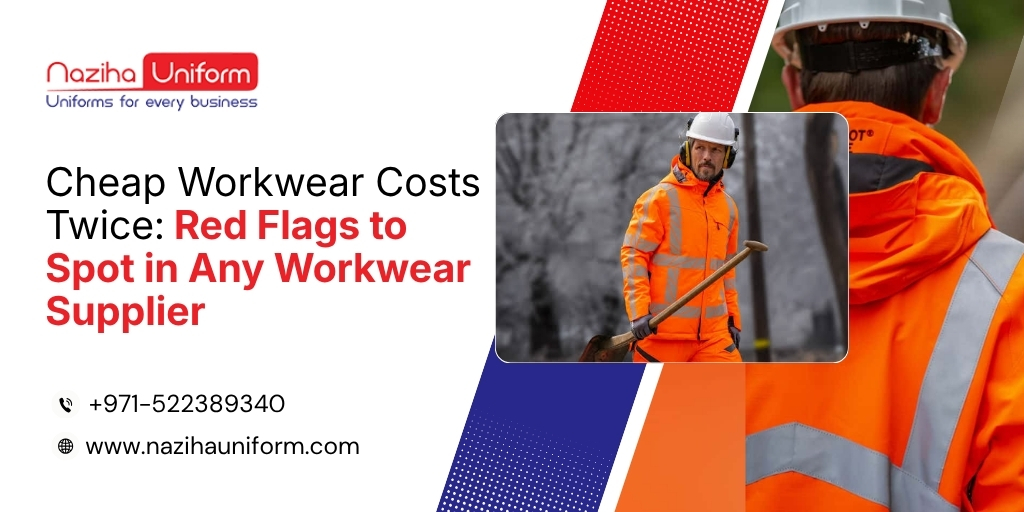
For businesses in construction, manufacturing, engineering, warehousing, and other demanding industries, workwear needs to withstand regular use while providing appropriate comfort and protection. Buying the cheapest option without checking its quality can lead to frequent replacements, unexpected expenses, and avoidable operational problems.
That is why choosing a reliable workwear supplier can require more than comparing quotations. You need to understand what you are paying for, how the garments are manufactured, and whether the supplier can meet your industry’s requirements.
Signs to Look For Before Placing Your Next Order
Here are the major warning signs to look for before placing your next order.
1. Prices That Seem Too Good to Be True
Low prices can be attractive, especially when you need clothing for a large workforce. However, an unusually cheap quotation deserves a closer look. A supplier may reduce costs by using lower-grade fabric, weaker stitching, inconsistent sizing, or less durable finishing. These problems might not be obvious when you first inspect a new garment. The real cost becomes apparent after employees start wearing the clothing regularly.
Before accepting a low quotation, ask:
- What type of fabric is included?
- What is the fabric weight and composition?
- Are the seams reinforced where necessary?
- Does the price include the requested customization?
- Are all sizes and specifications included?
- Is quality inspection part of the process?
- Are there additional charges for delivery or alterations?
A lower price is not automatically a bad sign. Some suppliers offer competitive rates because of efficient production or bulk purchasing. The important thing is to understand how the price is achieved. The goal is not to buy the most expensive uniform. It is to avoid paying repeatedly for garments that do not last.
2. Poor Fabric Quality
Fabric is one of the first things you should evaluate when choosing industrial clothing. Employees in factories, construction sites, warehouses, and maintenance operations may face demanding working conditions. Their clothing can experience friction, frequent washing, dust, and continuous movement. Poor-quality material may become uncomfortable, lose its shape, fade, or develop holes sooner than expected.
Look for these warning signs:
- Fabric that feels unusually thin for its intended use
- Uneven material or inconsistent texture
- Loose threads and unfinished edges
- Material that stretches or loses its shape unexpectedly
- Colours that appear inconsistent across garments
- No clear information about fabric composition
- No guidance on washing and maintenance
Ask the supplier to explain which materials are suitable for your working environment.
For example, warehouse staff may need durable garments that allow easy movement, while outdoor teams may benefit from breathable materials suitable for the climate. The right fabric depends on the job, not simply on how thick or heavy it feels.
3. Weak Stitching and Poor Finishing
A garment can look professional at first glance but still have construction problems. Stitching plays an important role in how well clothing withstands repeated movement and daily wear. Weak seams can open around pockets, shoulders, knees, elbows, and other areas that experience regular stress. Before approving an order, inspect the construction carefully.
Check for:
- Loose or uneven stitches
- Open seams
- Poorly attached buttons
- Weak zippers
- Unfinished edges
- Misaligned pockets
- Poorly secured fasteners
- Inconsistent finishing between garments
These details matter when clothing is worn throughout long working shifts. A dependable supplier should have a process for checking garment construction before delivery. If the company avoids questions about manufacturing quality or refuses to explain its inspection process, consider that a warning sign.
4. The Supplier Cannot Explain Safety Requirements
This is one of the most important red flags when purchasing industrial workwear.
Different workplaces present different hazards. Construction, oil and gas, manufacturing, electrical maintenance, and warehouse operations do not all require the same clothing.
Depending on the job, employees may need high-visibility garments, flame-resistant clothing, chemical-resistant materials, or other specialized protective equipment. Ordinary workwear should never be assumed to protect against hazards simply because it looks heavy-duty.
A supplier should be willing to discuss:
- The hazards employees may encounter
- The intended purpose of each garment
- Applicable safety standards
- Product specifications and certification
- Compatibility with other protective equipment
- Limitations of the clothing
Ask for relevant documentation when protective performance is required. Verify that any certification or standard applies to the specific product being supplied. If a supplier makes broad safety claims but cannot provide supporting information, do not rely on those claims.
A suitable industrial uniform manufacturer should understand that appearance, durability, and workplace protection are separate considerations. Each must be evaluated according to the garment’s intended use.
5. No Samples Before a Large Order
Ordering hundreds of garments without checking a sample can create unnecessary risk.
Photographs and digital mock-ups can help you assess the design, but they cannot fully show fabric feel, fit, stitching quality, or how a garment performs during movement. A sample gives you an opportunity to evaluate the product before committing to bulk production.
During the review, check:
- Fabric quality and comfort
- Stitching and finishing
- Size accuracy
- Pocket placement
- Logo quality
- Colour consistency
- Ease of movement
- Suitability for the intended role
Where possible, let employees or team representatives test the sample in conditions similar to their normal work. Also confirm that the approved sample reflects the specifications that will be used for the full order. A supplier that offers samples or a clear approval process gives you a better opportunity to identify problems before they affect the entire workforce.
6. Unclear Delivery Timelines
Delayed workwear deliveries can disrupt more than your purchasing schedule. A new project may require clothing before employees begin work. A company opening a new facility may need a complete set of garments ready for launch. Existing teams may need replacements before worn clothing becomes unsuitable. If the supplier cannot provide a realistic production schedule, you may struggle to plan around the order.
Before confirming your purchase, ask:
- When will the sample be ready?
- How long will production take?
- Does the timeline include customization?
- When should you expect delivery?
- What happens if materials become unavailable?
- How will delays be communicated?
- Can urgent replacement orders be accommodated?
Be cautious if the supplier promises an exceptionally short turnaround without understanding your order size or customization requirements. Reliable ones communicate realistic deadlines rather than make promises they cannot support.
7. Inconsistent Sizes and Fit
Sizing problems can make even well-made clothing difficult to use. When employees receive garments that are too tight, too loose, or incorrectly proportioned, comfort and mobility can suffer. The company may then need to arrange alterations or order replacements. These additional steps can increase costs and delay distribution. A supplier should explain how it manages sizing across different employees and garment styles.
Look for:
- Clear size charts
- Consistent measurements
- Options for different body shapes
- Onsite measurement where available
- Fitting procedures
- A process for addressing incorrect sizes
- Records for future orders
For large teams, accurate measurement and consistent specifications are particularly valuable.
Naziha Uniform offers onsite fitting services and retains measurements and patterns to simplify repeat orders. These processes can help businesses manage sizing as their workforce changes.
How to Choose a Reliable Workwear Supplier?
Once you know which warning signs to avoid, create a simple checklist before requesting quotations.
-
Define Your Requirements
Identify the job roles, working conditions, quantities, sizes, branding needs, and safety requirements before approaching suppliers.
-
Compare Like-for-Like Quotations
Make sure each quotation covers comparable fabric specifications, garment construction, customization, delivery, and other relevant charges.
-
Request a Sample
Inspect the product before approving bulk manufacturing whenever sampling is available.
-
Verify Safety Claims
For protective clothing, request the relevant documentation and check that the product is appropriate for the identified workplace hazards.
-
Confirm the Production Schedule
Agree on the expected delivery date and how any delays will be handled.
-
Check Repeat-Order Support
Ask whether the supplier can reproduce approved specifications for future employees and replacement garments.
Choose Quality Workwear That Pays Off in the Long Run!
Cheap workwear may seem like a smart way to reduce costs, but poor fabric quality, weak stitching, inconsistent sizing, and delayed deliveries can quickly turn those savings into recurring expenses. Choosing the right supplier means looking beyond the initial price and prioritizing durability, employee comfort, safety, and consistent service.
For businesses searching for a dependable industrial uniform manufacturer in the UAE, Naziha Uniform offers workwear and uniform solutions designed to meet diverse business needs. From selecting suitable fabrics to finding practical designs for different industries, partnering with us can help you maintain a professional appearance while making smarter long-term purchasing decisions.
Ready to invest in workwear that delivers lasting value? Visit Naziha Uniform to explore uniform solutions for your business. Choose quality over repeated replacements and give your team workwear they can rely on every day.
Frequently Asked Questions
-
Is expensive workwear always better than cheap workwear?
No. Price alone does not determine quality. Compare fabric specifications, construction, durability, suitability for the job, and the supplier’s service before deciding which option offers better value.
-
How can I check industrial workwear quality before buying?
Request a sample when available and inspect the fabric, seams, fasteners, fit, and finishing. For protective garments, also review the relevant product documentation and safety specifications.
-
What should I ask an industrial workwear supplier before placing a bulk order?
Ask about fabric, garment construction, customization, sizing, sample approval, production timelines, quality checks, delivery, and repeat-order support. For protective clothing, clarify the workplace hazards and applicable standards.
-
How often should industrial workwear be replaced?
There is no single replacement schedule for every workplace. Replacement depends on the garment’s condition, frequency of use, washing, exposure to hazards, manufacturer guidance, and company safety procedures.
-
Why is supplier experience important when buying industrial clothing?
An experienced supplier may be better equipped to understand different workplace requirements, recommend suitable garments, manage sizing, maintain consistent specifications, and coordinate bulk orders. You should still verify its capabilities and product documentation before purchasing.