
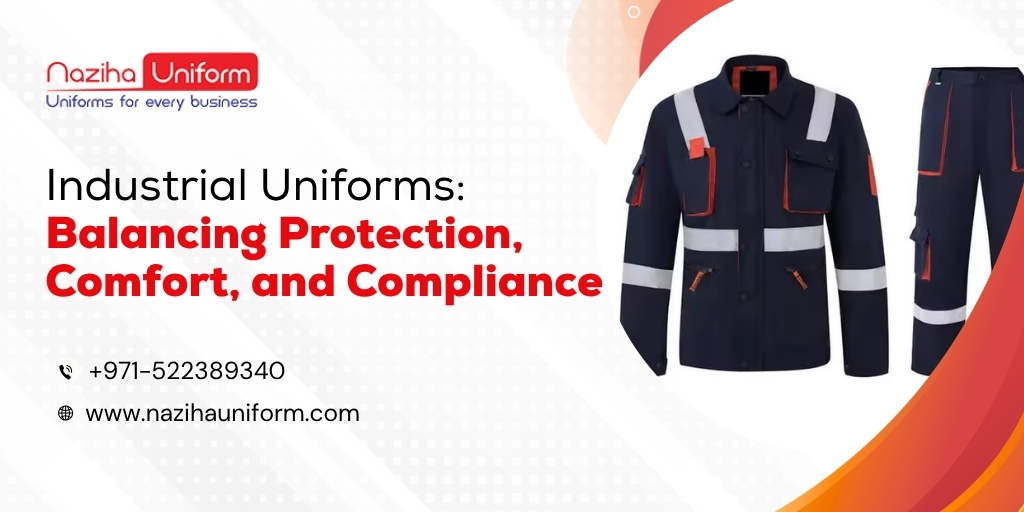
On a busy factory floor or a demanding construction site, what your team wears is never just clothing. It is a shield against real hazards, a support for long shifts, and a legal requirement all at once. Getting industrial uniforms right means holding three priorities in balance: protection from workplace dangers, comfort that lasts a full day, and compliance with safety standards.
Tip too far toward one and the others suffer, leaving you with gear that is either unsafe, uncomfortable, or non-compliant. That is why choosing the right workwear supplier UAE businesses can rely on matters so much. The best industrial clothing does not force a trade-off; it delivers all three together. This guide breaks down each pillar, explains how they work as a system, and shows you what to look for so your team stays safe, comfortable, and fully within the rules.
What Are Industrial Uniforms, and Why Do They Matter?
Industrial uniforms are specialised, durable garments worn by workers in physically demanding or high-risk environments such as manufacturing, construction, and oil and gas. Unlike ordinary clothing, they are engineered to protect, perform, and endure under tough conditions.
They matter because they do several jobs at once. First, they protect workers from hazards like heat, chemicals, and sharp materials. Second, they project professionalism, giving your workforce a disciplined, unified appearance. Third, they build brand identity through consistent logos and company colours. And fourth, they support functionality, allowing comfortable movement across a long shift.
In short, a good industrial uniform is a critical layer of protection that also reinforces your company’s image. In sectors where safety and cleanliness are under growing scrutiny, investing in proper workwear is not a luxury. It is a core part of running a safe, credible, and efficient operation.
Protection: How Do Industrial Uniforms Keep Workers Safe?
Protection is the first job of any industrial uniform, and it works by placing a durable, purpose-built barrier between the worker and the hazards around them. The specific protection depends on the environment.
Different worksites call for different safeguards, including:
- Flame-resistant fabrics for environments with heat, sparks, or fire risk, such as welding and oil and gas work.
- High-visibility features that keep workers seen on busy sites, in warehouses, and near moving vehicles or machinery.
- Chemical and abrasion resistance to guard against spills, rough materials, and general wear on manufacturing floors.
- Durable construction that withstands the daily rigours of heavy work without falling apart.
The materials matter here. Industrial uniforms are commonly made from tough cotton, polyester, or blended fabrics chosen to survive demanding conditions. Protection is not about a single feature, it is about matching the right fabric and design to the real risks of each role. A construction crew, a warehouse team, and a maintenance technician all face different dangers, so their uniforms should be built accordingly.
Comfort: Why Does Comfort Matter as Much as Safety?
Comfort matters because an uncomfortable uniform quietly undermines both safety and productivity. A worker distracted by heat, chafing, or restricted movement is more likely to make mistakes and less likely to wear their gear correctly.
In a warm climate especially, breathability is essential. Lightweight, breathable fabrics help workers stay cool during long hours outdoors or in hot facilities, while insulated options keep teams warm in cold storage or cooler months. Matching the uniform to the weather is a simple but powerful way to protect both comfort and performance.
Fit and freedom of movement are just as important. Uniforms should allow bending, reaching, and lifting without strain, which is why thoughtful cuts and functional features like added pockets and tool loops make a real difference to daily work. When staff can move freely and carry their tools easily, they work faster and more safely.
Comfort is not the opposite of protection. Done well, the two reinforce each other, since gear that feels good is gear that gets worn properly.
Compliance: How Do Industrial Uniforms Meet Safety Standards?
Compliance means the uniform meets the safety, hygiene, and performance regulations that apply to your specific industry. It is the pillar that turns good intentions into verified protection.
Many sectors are governed by specific standards covering things like flame resistance, visibility, and material performance. A uniform that looks protective but does not actually meet the relevant requirements can leave both workers and employers exposed, legally and physically. This is why compliance cannot be an afterthought.
A knowledgeable supplier plays a key role here. A trusted industrial uniform manufacturer understands the applicable laws and standards and ensures the workwear it provides genuinely meets them, rather than simply appearing to. That expertise protects you from costly compliance gaps and gives you confidence that your team is properly equipped. When you source uniforms, always confirm that the garments are designed to satisfy the regulations for your sector, not just general-purpose clothing dressed up as safety wear.
How Do You Balance Protection, Comfort, and Compliance Without Compromise?
You balance all three by treating them as a single system rather than competing priorities. The goal is a uniform where safety, comfort, and compliance are designed in together from the start.
The secret is customization matched to the actual job. A supplier who takes time to understand your environment, your hazards, and your workers’ daily tasks can specify the right fabric, the right features, and the right certifications for each role. This is far more effective than buying generic workwear and hoping it fits every need.
Consider a practical example. A warehouse team needs high-visibility features for safety, breathable fabric for comfort during active shifts, and durability to meet performance standards. A single well-designed uniform can deliver all three at once. That is the balance in action. When protection, comfort, and compliance are engineered together, you do not sacrifice one for another, you get a uniform that performs on every front and keeps your workforce safe, efficient, and unified.
What Should You Look for in an Industrial Uniform Supplier?
The right supplier combines quality, customization, compliance knowledge, and reliable service. These are the qualities that separate a genuine workwear partner from a simple vendor.
Look for the following when choosing:
- Customized solutions built around your specific industry, hazards, and branding, rather than one-size-fits-all stock.
- Compliance expertise, so the uniforms genuinely meet the standards your sector requires.
- Strong quality control that guarantees durable garments able to endure heavy daily use.
- Cost-effective options that fit your budget without cutting corners on safety or durability.
- Sector experience across fields like construction, oil and gas, manufacturing, logistics, and maintenance.
- Reliable delivery and service, including bulk-ready supply and responsive support.
A supplier who ticks these boxes helps you outfit your whole team consistently, safely, and within budget. That combination of quality items, on-time delivery, and excellent service is exactly what makes an industrial uniform partner worth keeping.
Safety, Comfort, and Confidence in Every Shift
Industrial uniforms are one of the smartest investments a hands-on business can make, because they protect your people, support their performance, and keep you on the right side of regulations all at once. The key is refusing to treat protection, comfort, and compliance as separate boxes to tick. When they are designed together, you get workwear that genuinely works, shift after demanding shift. Choose thoughtfully, match the uniform to the real job, and partner with a supplier who understands your industry, and you turn a basic requirement into a real operational advantage.
When you want that done properly, Naziha Uniform stands out as the best industrial uniform manufacturer businesses can trust. As a leading provider of durable, customizable industrial uniforms for construction, oil and gas, manufacturing, warehousing, and maintenance teams across Dubai and the UAE, we balances safety, comfort, and compliance in every garment, backed by quality control and bulk-ready supply.
Ready to equip your team with workwear that protects and performs? Contact Naziha Uniform today for a free consultation and give your workforce the safe, comfortable, and professional uniforms they deserve.
Frequently Asked Questions
- Why are industrial uniforms important?
Industrial uniforms protect workers from hazards like heat, chemicals, and sharp materials, while also promoting safety, professionalism, and brand identity. They are a critical layer of protection in demanding environments, helping create a workforce that is safe, unified, and compliant with workplace regulations.
- What industries need industrial uniforms?
Industries such as construction and engineering, oil and gas, manufacturing and production, warehouse and logistics, and maintenance and utility services all rely on industrial uniforms. Any sector with physical risk, safety regulations, or the need for a professional, unified appearance benefits from proper workwear.
- What materials are used for industrial uniforms?
Industrial uniforms are typically made from durable materials such as cotton, polyester, or blends chosen to withstand tough working conditions. The best choice depends on the job, with flame-resistant fabrics for heat exposure and lightweight, breathable options for hot climates.
- How do industrial uniforms improve workplace safety?
They improve safety through features like flame-resistant materials, high-visibility elements, and chemical or abrasion resistance, all matched to the specific hazards of each role. Durable construction also ensures the protective barrier holds up under daily wear, keeping workers safeguarded throughout their shift.
- Can industrial uniforms be customized for our company?
Yes. A good supplier offers customization to match your branding, safety requirements, and specific job roles. This includes company logos and colours, plus functional features like added pockets and tool loops tailored to the tasks your team performs each day.
- How do I keep uniforms compliant with safety standards?
Work with a supplier who understands the regulations for your industry and ensures the garments genuinely meet them. Confirm that the workwear is designed to satisfy the relevant safety, hygiene, and performance standards for your sector, rather than assuming general clothing will qualify.
- Our workers complain that safety gear is too hot and uncomfortable. What can we do?
This is common in warm climates and usually points to the wrong fabric choice. Switch to lightweight, breathable materials that still meet your safety requirements, and choose designs that allow free movement. A supplier can specify workwear that is both compliant and comfortable, so staff actually wear it correctly.
- Do you offer uniforms for different weather conditions?
Yes. Industrial uniform suppliers provide insulated options for cold environments and lightweight, breathable garments for hot conditions. Matching the uniform to the climate protects both comfort and performance, which is especially important for teams working long shifts outdoors or in temperature-extreme facilities.