
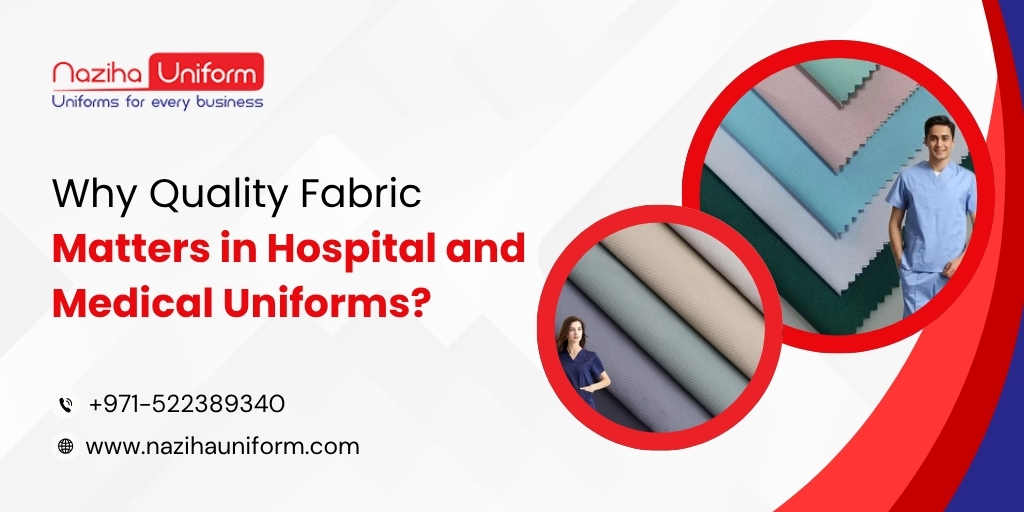
Healthcare professionals work long hours in demanding environments where comfort, hygiene, mobility, and durability all matter. Nurses, doctors, technicians, reception teams, and support staff all need clothing that performs from the first hour of a shift to the last.
A garment may look professional when it is new. The real test is how it feels after hours of movement and how it holds up after repeated washing. That is why fabric selection deserves serious attention when choosing a hospital uniform in Dubai.
For hospitals, clinics, diagnostic centres, pharmacies, and wellness facilities, an experienced supplier can guide fabric choices for each role and help ensure the garments meet practical and compliance needs.
Why Does Fabric Quality Matter in Healthcare Clothing?
Fabric affects far more than appearance. It shapes comfort, breathability, durability, maintenance, and suitability for the working environment. It also supports safety, regulatory adherence, and patient trust.
Healthcare employees spend their shifts walking, bending, lifting equipment, and assisting patients. Their clothing must allow natural movement without causing discomfort.
Quality material offers several practical advantages:
- Better comfort during long shifts
- Improved breathability
- Greater resistance to daily wear
- Easier maintenance and better shape retention
- Suitability for repeated laundering
- Fewer replacements and a more professional appearance
8 Key Factors to Consider When Choosing Medical Uniform Fabric
1. Comfort During Long Shifts
Nurses walk between wards, doctors move between consultations and procedures, and technicians stand for hours around equipment. Uncomfortable clothing becomes a distraction over time.
When assessing comfort, look at:
- Softness and weight
- Stretch and flexibility
- Moisture management
- Fit after repeated washing
Comfort is not a luxury. It is a practical requirement for staff who wear the same clothing through demanding shifts.
2. Breathability
Healthcare staff often move between air-conditioned rooms, corridors, treatment areas, laboratories, and outdoor spaces. In the UAE climate, this matters even more.
Breathable, lightweight fabrics allow better airflow and are especially useful for nurses, doctors, medical technicians, care assistants, clinic staff, and pharmacy teams. The final choice should still reflect each role and its workplace conditions.
3. Durability Through Repeated Washing
Medical clothing is washed frequently, which puts stress on fabric, seams, colours, and finishes. Poor-quality material can fade, shrink, or lose its shape quickly.
A durable fabric should retain its shape, colour, stitching, and fit wash after wash. For organizations buying in bulk, this directly reduces long-term replacement costs.
4. Easy-Care Materials Save Time
Healthcare teams already have packed schedules. Clothing that needs complicated care adds unnecessary work.
Useful easy-care features include:
- Machine-wash compatibility
- Quick drying
- Wrinkle resistance
- Colour retention
- Easy stain management
Always follow the manufacturer’s care instructions for each garment.
5. Hygiene and Infection Control
Hygiene is central in healthcare settings. Some fabrics come with antimicrobial treatments that can support a facility’s hygiene efforts.
However, fabric should never replace proper infection-prevention procedures. Garments should be chosen alongside the facility’s laundering and infection-control protocols. When a supplier makes antimicrobial claims, ask for product specifications and confirm the garments suit your own standards.
6. The Right Fabric Depends on the Role
No single fabric suits every healthcare employee. Requirements differ by role:
- Nurses: Flexible, comfortable clothing for constant movement
- Doctors: A balance of professional appearance, comfort, and easy care
- Laboratory staff: Garments suited to the lab environment and any safety requirements
- Reception teams: A polished look that reflects the facility’s brand
- Support staff: Durable clothing built for physical activity
Selecting fabric by role shows staff that their specific needs are understood.
7. Colour and Professional Appearance
Many healthcare facilities use colour to identify departments, roles, or teams. Fabric that holds its colour after repeated washing keeps that system consistent.
Well-chosen colours support department identification, brand consistency, staff recognition, and a clean, organized appearance. Choices should align with the organization’s own policies.
8. Fit and Fabric Work Together
Even premium fabric underperforms if the garment fits poorly. Clothing should allow easy movement without being too tight or too loose.
A good fit supports comfort, practicality, professional appearance, and staff satisfaction. This is why fabric, sizing, and design should be planned together, ideally with onsite measurement and made-to-order options.
How to Choose the Right Material for Medical Workwear
Before placing a large order, discuss these points with your supplier:
- What type of facility is it, and how many employees need uniforms?
- How long are typical shifts?
- How often will garments be washed?
- Do staff work indoors, outdoors, or both?
- Will departments use different designs or colours?
- Are there specific hygiene or safety requirements?
- Is branding required?
Clear answers help the supplier recommend suitable materials and construction.
Why Work With an Experienced Hospital Uniform Supplier in Dubai?
Fabric is only one part of the process. A reliable hospital uniform supplier in Dubai also manages sizing, construction, branding, production, quality control, and delivery.
Naziha Uniform works with hospitals, clinics, wellness centres, and educational institutions across the UAE. Its process covers consultation, fabric selection, onsite measurement, manufacturing, fitting, and delivery. The range includes medical scrubs, nurse dresses, doctor and lab coats, and reception attire, with breathable fabrics, ergonomic fits, and department-specific colour coding.
An end-to-end process like this is especially useful for multi-department orders and repeat purchases.
Questions to Ask Before Ordering
About the fabric: What material is used? Is it breathable and suitable for long shifts? How does it perform after repeated washing?
About construction: How are seams finished? Are different fits available? Can you see samples before bulk production?
About customization: Can colours match your branding? Is logo embroidery available? Can names or roles be added?
About future orders: Are measurements kept on file? Can designs be reordered easily? What are the production timelines?
Getting these answers early helps prevent problems later.
Frequently Asked Questions
- What fabric is best for hospital workwear?
It depends on the role, workplace conditions, and laundering process. Breathable, durable, and easy-care fabrics are generally preferred in healthcare environments. - How often should medical uniforms be replaced?
There is no fixed schedule. Replacement depends on wear frequency, washing, garment condition, and the organization’s policies. - Can hospital uniforms have antimicrobial properties?
Yes, some fabrics include antimicrobial treatments. These support hygiene but should never replace established infection-control practices. - Should every department wear the same colour?
Not necessarily. Many facilities use different colours to distinguish departments or roles, based on their branding and identification needs. - Can medical uniforms be customized?
Yes. Suppliers such as Naziha Uniform offer customization of colours, designs, fabrics, logo embroidery, and sizing.